

<img height="1" width="1" style="display:none" src="https://www.facebook.com/tr?id=468558350467320&amp;ev=PageView&amp;noscript=1">

NEW-Mintago-Research  mintago

NEW RESEARCH

2026 HR PLAYBOOK

Retaining women in the workplace 

The juggle is real: the 130k retention problem

Why you’re struggling to retain women at the peak of their careers – and what you can do about it.

Artboard 1-1   Exclusive 2026 employee research
Artboard 1-1  SME-friendly retention strategies
Artboard 1-1  A CFO-ready business case
Daily Juggle Lower

TRUSTED BY 500+ UK BUSINESSES

The headlines

Mintago surveyed 1,300 employees and consulted key industry leaders. 

1. Women aren’t building financial security
Employees have smaller safety nets at 40 than those in their 20s. Mid-life women are living on the edge. 

2. Care is disrupting work
1 in 3 employees took time off last year to care for family. Elderlycare demands are rising.

3. Strife begins at 40
Financial, care and health pressures peak for women aged 40–49. This is the tipping point.


Stick around and find out how to truly support your female talent, no matter the life stage and your bottom line. 

  • “SMEs consistently underprice the impact of not supporting women. The ROI is a no brainer. We can’t afford to lose this valuable talent and experience.

    Chieu Cao
    CEO and Co-founder of Mintago

    roundtable_chieu_360

hr and finance


This report will tell you:


  The pressures pushing your best female talent out 
   Strategies SMEs can follow to retain more women 
   Everything you need to build your business case

Why should employers care?

This leaves women in mid-to-senior roles dangerously exposed – making them an expensive flight risk for employers.

1 up 2 down-04

For every woman you promote at senior level, two more walk away.
(McKinsey, 2022)


Rose Icons_Incon_Stalled
Turnover

Mid and senior employees can cost 0.75x–2x of their annual salary to replace.

Rose Icons_Icon_Absent
Absenteeism

Women’s health and care absences cost the average business £37,000 a year.

Rose Icons_Icon_Production
Productivity

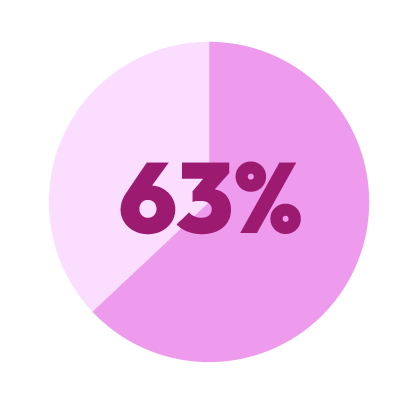
63% of working carers have experienced difficulties concentrating at work.

“There’s no shame in wanting to do right by people in order to get a better business outcome.”

“It can be a win-win all round. We can deliver happier, healthier, motivated and energetic people and deliver better business outcomes as a result.”

Peopleful

Georgie Mack

CEO, Peopleful

Meet Sarah. 

She’s about to become your most expensive resignation - and not for the reason you might think. This is the timeline of her career. Let’s hit rewind...

Meet Sarah

Timeline_Start_1outlines

1 | Sarah is the Head of Operations for a small hotel chain.

Brilliant at her job, beloved by her team, vital to her business. 

Timeline_Start_2outlines pink

2 | If she has kids, the maths gets brutal.

So Sarah reduces her work hours. With these nursery fees, who wouldn't?

Timeline_Start_3outlines

3 | Life gets expensive. Pension contributions start to slip...

Financial advice could change everything, but how?

Timeline_Start_4outlines pink

 4 | She returns full-time. Ambitious, capable, delivering. 

She's killing it. There's no reason she shouldn't progress. Right...?

Timeline_Start_5outlines pink

5| She's earned it, but they give it to someone else.

Two promotions go to people who just "seem" more available.

Timeline_Start_6outlines

6 | Then biology happens. Nobody talks about this bit.

Menopause brings brain fog and insomnia. Work doesn't flex.

Timeline_Start_7outlines pink

7 | Caring for kids on one side, elderly on parents the other.

When her mum falls ill, Sarah has to step in. Sound familiar?

Timeline_Start_8outlines

8 | She wants to grow, but she's exhausted and broke. 

When her mum needs more care, Sarah quits. She's out of options.

TURNOVER BUSINESS CASE

It's not the salary. It's the support.

Sarah is expensive to replace.

Why is she leaving? Not for a better job. Not for more money. She's leaving because the maths doesn't work anymore.

The cost of turnover ranges from 30% to 200% of a person's salary. (CultureAmp, 2025)

Here's what's really expensive (especially for SMEs):

  • Exit interviews and recruitment time and costs
  • 3–6 months of reduced productivity while covering the role
  • Training her replacement on  years of institutional knowledge
  • The ripple effect when her team and performance drops

According to CIPD, the industries with high turnover are hospitality, retail, care and construction. (CIPD, 2024)

We all know Sarah. She's a friend, a colleague, a manager. You just haven't realised yet.

The cost to keep her?

Less than you're paying for Friday pizzas. Seriously.

Mid and senior employees can cost 0.75x to 2x their annual salary to replace.

Coin Comparison

Registered Manager for a care home.

Example: 1x her salary to replace.

Manger 1

Salary                 

£48,000

Cost to replace

£48,000

Commercial Manager for a construction firm.

Example: 1.5x her salary to replace.

manager 3 blue

Salary                  

£59,000

Cost to replace

£88,500

Head of Operations for a hotel chain.

Example: 2x her salary to replace.

Manager 2

Salary                   

£65,000

Cost to replace

£130,000

ABSENCE BUSINESS CASE

We talked about turnover... now let’s talk about absence. 

If you need to take this a step further and start quantifying the cost of absences, let's do it. 

This is how much the loss of output related to childcare, health and unpaid care can cost an average company with 100 employees:

£36,906 a year

the cost of lost output due to absence for an avg. 100ee company

Section of workforce

Average days  / year

Estimated yearly cost to the average UK employer
(at £66/day loss of output*)

Parents: 36.34% 

2.68 days short notice childcare absences

£6,463

Women: 48.87%

9 days health-related absence

£28,585

Carers: 14%

2 days care-related absence

 £1,858

For industries with more women in their workforce, the costs are higher...

Hospitality


£39,055

The annual cost of lost output due to absence for hospitality companies where women make up 51.47% of the workforce. (ONS)

Education


£50,034

The annual cost of lost output due to absence for education where women make up 69.85% of the workforce.(ONS)

Health and social care


£53,572

The annual cost of lost output due to absence for health & social care where women make up 75.78% of the workforce. (ONS)

Chapter one: the three pressure points

Women in the workforce face three main pressures throughout their careers

These pressures tend to build over time, driving turnover, absenteeism and low productivity.

low Security@0.5x
Low financial security
Complex Helath@0.5x
Complex health issues
Family Care@0.5x
Rising family care demands

A ) The money trap

NEW-Mintago-Research  mintago

NEW RESEARCH

Fresh Mintago research reveals middle-age, middle earners are living on the edge.

We like to imagine we’ll build financial security as we get older. We assume we’ll be better off at 40 than we were at 25.

But our data shows the opposite. 

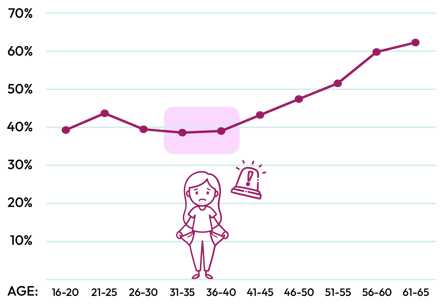
Employees in their 20s are more likely to say they could survive +2 months without income than those at 40.

Low Cash

Employees able to live without income for +2 months 

Mintago Score Data
It gets harder for women to catch up as they get older.

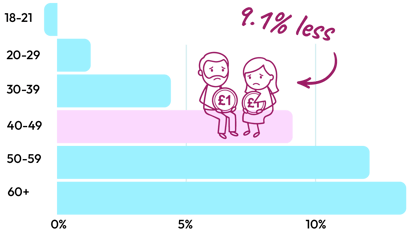
Women face a financial double hit: they earn less AND life costs them more.

By their 40s, women earn just 91p for every £1 men earn. 

But that's only half the problem. The real killer? Life gets expensive right when their earning power stalls.

9.1 percent less

Gender Pay Gap vs. Age

(ONS: Gender pay gap in the UK: 2024)

By the time women turn 40, work isn’t always worth it.

Ages 16–30


Careers start strong with younger women now outearning men. But don’t let the headlines fool you – once women enter their 20s, the gap begins to grow. 

Ages 31–35


Many women take their first career breaks now for maternity – often returning part-time. As a result, their income stalls, while men's keeps on climbing.

Ages 36–40


Now women find themselves playing catch up – racing to top up their pensions, while juggling part time work and childcare - really feeling that 'motherhood penalty'.

Ages 40+
The perfect storm

This is the tipping point. Now women face lower lifetime earnings, smaller pension pots, less savings – all while dealing with rising care demands and health issues.

This creates a ticking time bomb for employers

Your most experienced female leaders are financially exposed right when life gets most expensive. This presents two risks for employers:

  1. Everything becomes about money.
    When financially exposed, even a small pay rise from a competitor looks attractive.

  2. One crisis changes everything.
    A parent falls ill, a divorce hits, childcare costs spike - suddenly work stops making financial sense.

take Action 

Instead of letting Sarah enter her 40s financially exposed…

Her employer could have offered access to personalised financial advice – helping her build a safety net for the future.

Discover strategies to build financial resilience in Chapter Three


Dot_Pencil


“Women's lives can be a big juggle.”

“I took a career break for maternity leave, then I came back on a part-time basis.

"Clearly you have a reduced income, so your pension contributions have reduced. And your expenses and outgoings go up considerably.”

Natasha Ilumiti

Natasha Newby
Employee Benefits Director, ilumiti
B) The invisible health crisis

Women’s health issues are going undiagnosed and untreated.

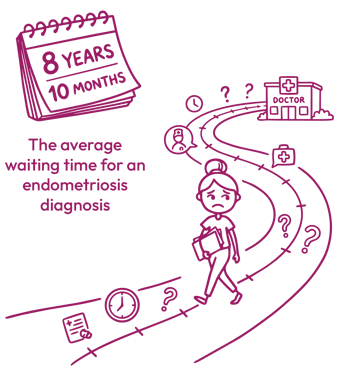
Data shows women are more likely to be dismissed by medical professionals or wait years for a diagnosis. Without a diagnosis, they can’t easily ask for the workplace adjustments they need.

Plus, imagine the hours she's spent on useless appointments where she wasn't taken seriously, or how many avoidable sick days she's used. 

Workplace policies still fail to recognise basic women’s health issues.

Without formal leave or flexible working, women are forced to use sick days and annual leave for common health issues.

Woman Health Chart v3

The percentage of women with these issues, who reported taking time of work due to their health concerns. 

(Sources - view appendix)

The result? A silent drag on productivity.

When employers don’t provide women with the support they need, the story only ends one way.

  1. Low productivity as women are forced to work through painful symptoms.
  2. High absenteeism as a lack of flexibility forces them to take time off at short notice.
  3. Lost talent when symptoms become too much to manage alongside work.

take Action 

Instead of watching Sarah lose confidence during perimenopause…

Her employer could have offered flexible working, women's health benefits, and EAP access to help her manage work around her symptoms.

Learn how to build a data-led women’s health strategy in Chapter Three


Dot_Pencil


“Actually, it’s not rocket science.”

“It’s not unlikely that a lot of women in your workplace are going to be facing some of these challenges.”

Peopleful small

Georgie Mack
CEO, Peopleful

C) The care collision

The spiralling cost of care means work stops making financial sense.

At this point, work stops adding up. No wonder:

75% of women who pay for childcare say it no longer makes financial sense to work.

(Pregnant Then Screwed)

The cost of childcare in the UK is unaffordable for many working parents

Childcare Hours Under two Two years old
Full time £1,433 a month £1,354 a month
Part time £423 a month £398 a month

(MoneyHelper)

Elderlycare is even more expensive

Full time elderlycare (per year)
Residential care homes
Nursing care homes Dementia care homes At home care
£67,496 £79,820
£81,328 £21,840

(Carehome.co.uk)

“That mental anguish is huge.”

“I think anything we can do to help and support is essential.”

OFS

Wayne Griffiths
Founder & Managing Director, 
One Financial Solutions


NEW-Mintago-Research  mintago

NEW RESEARCH

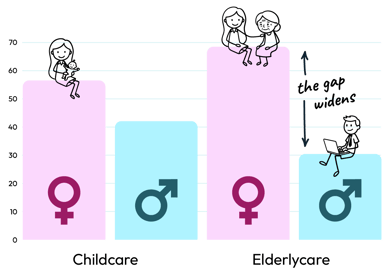
Women are more likely to have taken time off to care for both children and elderly loved ones. 

The gap starts when women take time off for maternity. That sets the tone for the rest of their careers. The gap widens dramatically when it comes to caring for aging parents. 

Gender Care Gap v3

Gender Care  Gap
(Mintago employee survey Nov 2025)

Employers are on a collision course with reality.

When employers ask women to choose between work and family – family always wins, while employers pay the price.

  1. Stalled career growth as women take breaks to care for family.
  2. Unexpected time off for care emergencies.
  3. Lost talent, expensive to replace, when the numbers stop adding up.

take Action 

Don't make Sarah choose – instead, provide...

Childcare: Salary sacrifice saves her up to 47% on fees, making full-time work financially viable again.

Elderlycare: Expert advice removes the "crazy" stress of navigating funding and finding care for aging parents.

When work makes financial and emotional sense, your best leaders stay. 

Learn more about supporting working carers in Chapter Three

Dot_Pencil


“600 people quit the workforce every day to become unpaid carers.”

“We have a relatively small team. If one person is off, it's gonna impact performance massively."

DC mintago

Daniel Conti

CFO and Co-founder, Mintago

Chapter two: the tipping point

Just when women reach their peak earning years…

Icon_expensive@0.5x
Most valuable to their employer…
Icon_money@0.5x
Most expensive to replace…
Incon_Emergency@0.5x
They’re hit by a “perfect storm”

This is the tipping point. Now is when family care pressures collide.

Did you think that egg and cress sandwich you forgot to put in the fridge was the riskiest sandwich on your desk? Think again. The Sandwich Generation is a huge retention risk that most employers aren’t even thinking about. And it’s growing. 

Who is the “Sandwich Generation”?

The Sandwich Generation is a growing number of people who are caring for children and aging family members at the same time

What’s driving it?

  • People are having children later in life
  • People are living longer – but not healthier lives

NEW-Mintago-Research  mintago

NEW RESEARCH

1 in 3 employees (32.5%) have taken time off work for caring responsibilities in the past 12 months (childcare, elderlycare, or both).

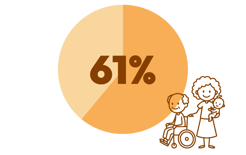
61% doodle

Sandwich carers are more likely to be women

(ONS)

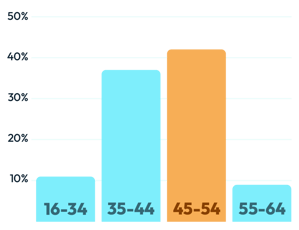
Age Sandwich 2

Most sandwich carers are aged 45–54

(ONS)

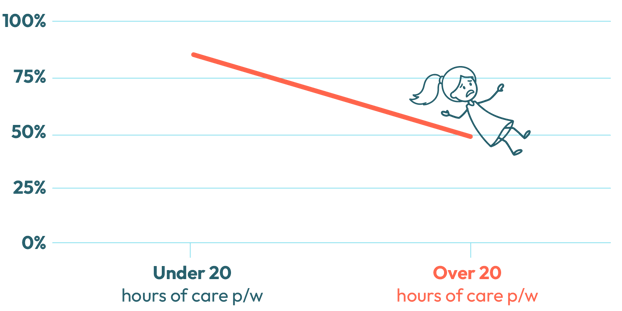
Hours of care vs. employment

When carers have to provide more than 20 hours of care a week, they’re dramatically more likely to be in poor health, out of work and struggling financially.

take Action 

Employers should focus on supporting their female talent before they reach this point of crisis.


Hours per week


Hours of care vs. employment

(ONS)

“It tends to intensify over time.”

“It’s very common that it starts with quite simple tasks, such as picking up the shopping.

“But over time, as [their] health conditions deteriorate, that’s when they need more support.”

Carents small

Jana Meier

Head of Partnerships, Carents

It's not just her crisis. Employers are also paying the price. 

Care demands don't wait for the weekend. Unexpected absences spike.

When a parent falls or carers don't show up, employees have no choice but to take emergency leave - creating sudden staffing gaps and missed deadlines.

63% copy

Experienced difficulties concentrating

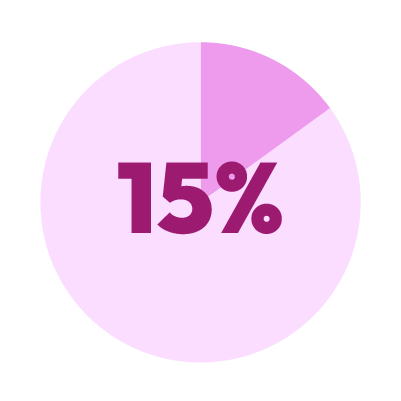
15% copy

Have taken sick leave to provide care

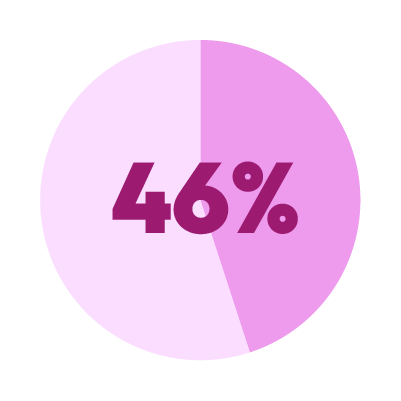
46% copy

Have used annual leave to provide care

Impact of unpaid care on work
(CIPD – Supporting working carers)

Productivity dips. Menopause can make women step back from careers.

It’s not just hot flushes – it’s the cognitive symptoms of menopause that pose the real risk. It's leading to poor decision-making and exhaustion when you need them most.

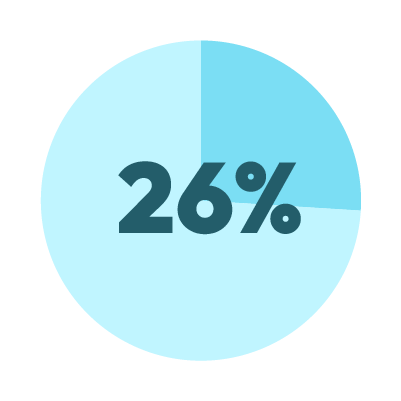
26% copy 2

Have taken time off work

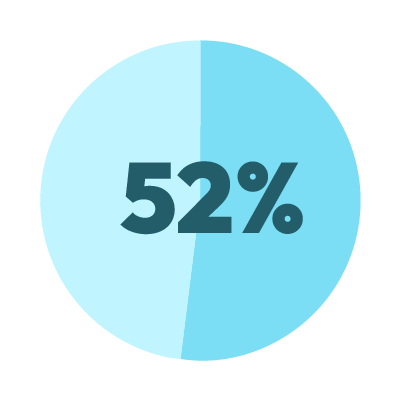
52% copy 2

Lost confidence at work

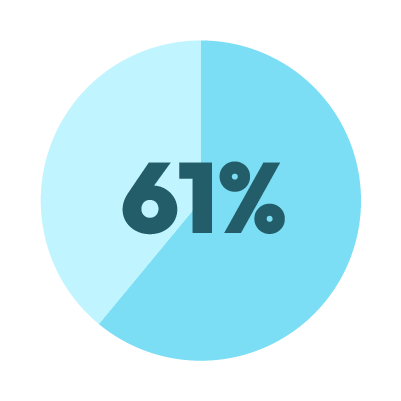
61% copy 2

Lost motivation at work

Impact of menopause symptoms on work
(Fawcett – Supporting working carers)

“It really is overwhelming.”

“You have yourself to take care of, and you have your family, and your kids. And obviously you're at work as well.

As an employer, I want to give people the tools to navigate these things with confidence”

DC mintago

Daniel Conti

CFO and Co-founder, Mintago

Then they walk away

Caring has a dramatic impact on work. Your most experienced women don't want to leave - but you're forcing them to choose.

21% of carers said they had to leave work earlier than planned, 22% said they've changed roles, and 27% have reduced their hours. (Carents – Invisible and Overwhelmed)

7 in 10

71% of working carers have made changes to their work because of caring responsibilities.

(Carents – Invisible and Overwhelmed)

  • I had to give up my job to care for my mother in Nov 2024. I found the previous 12 months working full time as well as providing care for my mother totally exhausting.

    Survey Respondent
    Invisible and Overwhelmed,
    Carents

  • "Having someone who knew the difference between homes that look good and homes that actually deliver gave us such peace of mind."

    John & Dave, Lincolnshire - Finding the right nursing home for their Dad

  • “I had to leave my well paid job due to juggling parent care plus menopause.”


    Survey Respondent

    Invisible and Overwhelmed, Carents

  • "Having someone coordinate everything and help us choose appropriate care, made the transition manageable instead of overwhelming."

    Mark, Leeds - Transitioning parents into a at home care

There’s light at the end of the tunnel. 

NEW-Mintago-Research  mintago

NEW RESEARCH

Only 1 in 20 employees aged 50–54 have taken time off in the last 12 months for childcare responsibilities.

Fresh Mintago data reveals employees are dramatically less likely to take time off work for childcare once they’re over 50. 
That’s good news for employers. It tells us the sandwich risk is highest for women in their 40s.

Support your team through this decade and you’ll be rewarded with loyal, experienced, highly valuable employees in their 50s.

Chapter three: the simple fixes

When workplaces fail to support their women, employers pay the price…

Rose Icons_Icon_Production
Reduced productivity
Rose Icons_Icon_Absent
High absenteeism
Rose Icons_Incon_Stalled
Expensive turnover

Simple support systems can make a world of a difference. 

Financially viable benefits that actually work for every woman, every salary band and every life moment.

QUICK WINS: High impact, easy to implement
Childcare

Childcare salary sacrifice
Save parents up to 47% on nursery fees
Pensions

Pension salary sacrifice
Help women catch up after career breaks
Occupational Health

Flexible working
Let employees manage care around work
Employee Assistance programme

EAP access
Catch stress early before it turns into burnout
STRATEGIC WINS: Bigger, longer-term impact
Advice

Financial advice & coaching
Help women build security and reduce salary-chasing
Virtual GP

Virtual GP
Fast diagnosis instead of months of suffering
Elderlycare

Elderlycare support
Take the pressure off with support for finding and funding care
Salary Sacrifice copy

Salary sacrifice schemes
Lots of opportunities to save on NIC and income tax to stretch salaries further
ADVANCED: Dedicated support
Financial Wellbeing_1

On-demand pay
Give families flexibility without resorting to high-interest debt
Car Maintenance

Occupational health
Provide workplace adjustments for menopause and health conditions
Womans Health2

Women's health
Offer discounted access to common but specialised health solutions

What support do working carers need?

We asked Jana Meier from Carents what employers can do to support their employees with caring responsibilities. These are her top recommendations.

Carents small

Jana Meier,

Head of Partnerships, Carents

BENEFITS

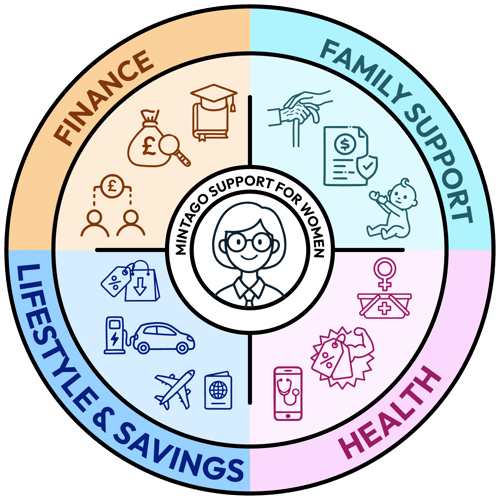
Mintago support for women

4-pillars

What support do the women in your teams need?

FINANCE
1:1 Financial advice and coaching
Pension salary sacrifice
Lost pension pot search
Education and masterclasses
FAMILY SUPPORT
Childcare salary sacrifice
Elderlycare funding support
Legal advice
HEALTH
EAP
Virtual GP
Health rewards and discounts
Women's health marketplace
LIFESTYLE & SMART SAVINGS
Holiday travel salary sacrifice
EV,  EV Charging and Cycle2Work
Supermarket and retail discounts 
Mobile and tech salary sacrifice

How can data help you retain more female talent?

Georgie Mack from Peopleful explains why it’s so important to understand the specific issues affecting your employees, before you rush in with solutions.

Peopleful

Georgie Mack

CEO, Peopleful

THE REWARD?

Sarah stays. You retain talent, institutional knowledge and your recruitment budget.

 Timeline_End_1outlines

1 | Access to childcare salary sacrifice helped Sarah afford to return to work full time after having children.


Timeline_End_2outlines pink


2 | Pension salary sacrifice helped her catch up after maternity leave, so she kept up with her retirement plans.


Timeline_End_3outlines

3 | She had the time and confidence to bag two key promotions, easing the pressure on her family’s finances.


Timeline_End_4outlines pink

 4 | Sarah used her virtual GP to get a fast perimenopause diagnosis and her occupational health benefits helped her make simple adjustments to stay productive.

 Timeline_End_5outlines


5 | When her mum fell ill, she used elderlycare support to find and manage the care she needed.

Timeline_End_6outlines


6 | A financial adviser helped her apply for government funding, so she could afford a dedicated carer for her mum, without giving up her career.

Speak to Mintago about benefits that fit every life stage, every life moment, every salary band. 

Whether you're launching a new project or leveling up an existing one, we're here to help you take the next step, quickly and confidently.

Thank you to our partners...

Jana Meier

Jana Meier

Head of Partnerships, Carents


Jana has over 13 years of experience in health and social care. She’s worked with public and private health and social care clients – including the NHS, where she contributed to innovative solutions that improve delivery and outcomes.


Carents-1


Carents is the UK’s national organisation dedicated to supporting adult children who care for their ageing parents. 

Carents was founded by Dr Jackie Gray after she experienced multiple shortfalls in traditional support services when caring for her own father. In 2020, she founded The Carents Room with the aim of filling gaps in support and improving outcomes for those affected by longevity.  


Georgie_Solo

Georgie Mack

CEO and Founder, Peopleful

Georgie has spent the last 15 years working as Managing Director, innovation consultant and leader. Her fierce belief is that work should be a positive and energising experience, where the tools and conditions for good mental health and wellbeing are baked into the overall design of the organisation.


Peopleful Small


Peopleful help organisations understand the impact of the working environment on their employees’ wellbeing – providing data that informs practical change where it is needed.

The Peopleful team is passionate about creating working environments where people can flourish and perform optimally. They believe a data-driven approach creates the best chance for effecting change.


Natasha Newby

Natasha Newby

Employee Benefits Director, ilumiti

Natasha brings 25 years of experience and infectious energy to ilumiti. She's passionate about building strong client relationships and developing innovative benefit solutions that help businesses thrive.



Ilumiti


ilumiti partner with organisations to design and deliver employee benefits packages that drive engagement, support wellbeing, and help you attract and retain top talent.

They inspire people to optimise their financial future by helping them clearly understand what’s achievable – and then enabling them to achieve it.

Wayne

Wayne Griffiths

Founder/Managing Director, One Financial Solutions


Wayne is a later-in-life financial specialist – and co-founded of One Financial Solutions. He has more than 30 years of experience guiding individuals and families through some of life’s biggest financial decisions. .



One Financial Solutions


One Financial Solutions is a fully Independent Financial Advice firm that spans the length and breadth of the country, from Eastbourne to Glasgow.

The company has a clear vision in wanting to give truly independent and holistic advice to both personal and business clients. Their advisers take the time to listen and develop deep and meaningful relationships, putting their clients at the heart of everything they do.

Appendix

Mintago Research

Where did we find our data?

Mintago’s Workforce Wellbeing survey

We surveyed employees from across our user base in November 2025 to understand the impact of caregiving on retention. The final data sample consisted of 1,303 employees. All responses were anonymised to ensure confidentiality.

Survey questions focussed on the amount of care employees currently provide to children and ageing relatives, the impact of caregiving on work, how they would respond if those demands increased, and how comfortable they felt discussing care challenges with management.

Respondent breakdown:

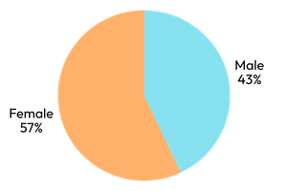
By gender

Slightly more women (57%) responded to our survey than men (43%).
Alpha  Appendix Chart 1

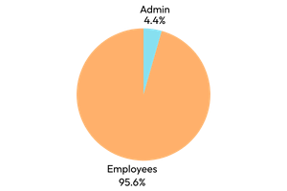
Benefits administrators vs. employees

The vast majority of survey respondents were employees (95.6%) – whilst a small number (4.4%) were benefit administrators.
Alpha Appendix chart 3

By salary band

The majority of survey respondents (68.53%) earn £20,000–£50,000.

Alpha Appendix chart 2

Mintago Score analysis

Supplementary data was drawn from the “Mintago Score” – a financial health check completed by users during their initial onboarding to Mintago. This dataset provides insights into financial resilience, covering metrics such as debt levels and financial runway.

While direct personal identifiers were removed, specific demographic variables – including age range and salary band – we included for data analysis. This data provides a snapshot of an employee’s financial health when they first join Mintago.


 

Carents Research

Carents – Ageing society: Managing work and care

Some quotes in this report come from a series of focus groups that were led, organised and facilitated by Christine Bell in partnership with Carents®, Centre for Facilitation and Nifty Fox Creative.

There were 3 focus groups during January 2025, held at different times of day to accommodate working carents’ availability. The focus groups provided space for working carents to share their experiences of balancing work with the care for their elderly parents.

Carents – Invisible and overwhelmed: survey

Some supporting statistics have been drawn from a survey of employees with elder care responsibilities, conducted by Carents over a three-week period beginning on 25th February 2025.

Carents invited their members to complete an online survey for working carents. Participants were not offered any incentives; their involvement was purely voluntary, providing an opportunity to share their insights. Carents limited analysis to the responses from 1074 adults who reported that they had direct experience of caring for an ageing parent.

Cost of absence to employers

To calculate the cost of absence to employers, we looked at the UK government’s 2025 report “Keep Britain Working”.

In the report, they calculated the daily cost of sickness absence to employers at £120.

This was based on an annual cost of sickness absences of £85 billion. That breaks down as follows:

  • £10 billion – Direct costs from Statutory & Occupational Sick Pay
  • £47 billion – Lost output when employees cannot work
  • £21 billion – Lost productivity from presenteeism
  • £7 billion – Conflict resolution, litigation, and recruitment

To calculate the cost of a lost day’s work, we chose to exclude the costs related to sick pay, presenteeism, conflict resolution, litigation, and recruitment – and focus purely on lost output.

The cost of lost output represents 55% of the total cost. That makes the cost of lost output per day of absence £66.

Average absence days taken for each issue

We used a range of sources to estimate the average number of absence days taken for each of the challenges that face working women.

Absence due to short notice childcare

We calculated absence days for short notice childcare using data from Bright Horizons:

https://solutions.brighthorizons.co.uk/blog/modern-family-index-backwards-step-for-working-parents

Their study found that 67% of working parents have taken an average of 4 days off at short notice in the last 12 months.

Averaged out, that means each parent takes 2.68 absence days for short notice childcare.

Absence due to women’s health issues

We calculated women’s health-related absence days using data from Benenden Health:

https://www.benenden.co.uk/newsroom/gender-health-gap-for-business/

They found that women in the UK miss an average of nine days of work a year due to health issues.

Absence due to care demands

We calculated absence days for family caregiving responsibilities using Bupa’s Wellbeing Index 2024. They found in the past year alone, respondents had to take an average of 2 days of annual leave to fulfil these responsibilities.

Employee demographic breakdown

We used a range of sources to calculate the average breakdown of various demographics for UK businesses.

Women in the workforce

To calculate the percentage of the workforce who are women, we used government employment data from February 2025:

https://commonslibrary.parliament.uk/research-briefings/sn06838/


The female employment rate was 71.8% and the male employment rate was 78.2%. That means women make up 47.87% of the UK workforce.

Women in different industries

We used ONS data to find the gender breakdown for specific industries:

https://www.ons.gov.uk/employmentandlabourmarket/peopleinwork/employmentandemployeetypes/datasets/employmentbyindustryemp13


Parents in the workforce

To calculate the percentage of the workforce who are parents, we used two sets of data. 

We used government labour market statistics to find the total size of the UK workforce:

https://commonslibrary.parliament.uk/research-briefings/cbp-9366/

Then we looked at ONS data from the same year to find the total number of parents with dependent children in employment:

https://www.ons.gov.uk/employmentandlabourmarket/peopleinwork/employmentandemployeetypes/datasets/workingandworklesshouseholdstablepemploymentratesofpeoplebyparentalstatus

We compared the number of parents with dependent children in employment: 12.44 million

With the total size of the UK workforce: 34.23 million

To establish that parents make up 36.34% of the UK workforce.

Carers in the workforce

To calculate the percentage of carers in the workforce, we used data from Carers UK. They estimate that 1 in 7 employees are caring for a loved one.

https://www.carersuk.org/press-releases/research-more-than-600-people-quit-work-to-look-after-older-and-disabled-relatives-every-day/

Third Party Sources

Supplementary data for this report has also been collected from a number of publicly available sources. 

McKinsey Women in the Workplace Report

https://www.mckinsey.com/~/media/mckinsey/featured%20insights/diversity%20and%20inclusion/women%20in%20the%20workplace%202022/women-in-the-workplace-2022.pdf

Culture Amp: Understanding and calculating the cost of employee turnover

https://www.cultureamp.com/blog/cost-of-employee-turnover

CIPD: Benchmarking employee turnover: What are the latest trends and insights?

https://www.cipd.org/uk/views-and-insights/thought-leadership/cipd-voice/benchmarking-employee-turnover/

ONS: Gender pay gap in the UK: 2024

https://www.ons.gov.uk/employmentandlabourmarket/peopleinwork/earningsandworkinghours/bulletins/genderpaygapintheuk/2024

EndometriosisUK: ENDOMETRIOSIS FACTS AND FIGURES

https://www.endometriosis-uk.org/endometriosis-facts-and-figures

Fawcett: MENOPAUSE AND THE WORKPLACE

https://www.fawcettsociety.org.uk/Handlers/Download.ashx?IDMF=9672cf45-5f13-4b69-8882-1e5e643ac8a6

Fertifa: Endometriosis Awareness Month: How to set up your workplace

https://www.fertifa.com/post/endometriosis-awareness-month-how-to-setup-your-workplace

Fertifa: Fertility Network Survey

https://www.fertifa.com/post/fertility-network-survey

Bupa: Female Health and Employment: Dealing with periods in work

https://www.bupa.co.uk/business/news-and-information/female-health-and-employment

National Library of Medicine: Productivity loss due to polycystic ovary syndrome and its relationship to race, mental health and healthcare delivery indices

https://pubmed.ncbi.nlm.nih.gov/38983727/#:~:text=Results%3A%20Of%201%2C105%20respondents%2C%201%2C058,back%20at%20work%20by%20PCOS

Pregnant Then Screwed

https://pregnantthenscrewed.com/three-quarters-of-mothers-who-pay-for-childcare-say-that-it-does-not-make-financial-sense-for-them-to-work/

Money Helper: Average childcare costs

https://www.moneyhelper.org.uk/en/family-and-care/becoming-a-parent/childcare-costs

Carehome.co.uk: Care home costs 2026: How much do you pay?

https://www.carehome.co.uk/advice/care-home-fees-and-costs-how-much-do-you-pay

ONS: Sandwich carers, UK: January 2021 to May 2023

https://www.ons.gov.uk/peoplepopulationandcommunity/healthandsocialcare/socialcare/bulletins/sandwichcarersuk/january2021tomay2023

NHS: Menopause

https://www.nhs.uk/conditions/menopause/

CIPD: Supporting working carers

https://www.cipd.org/globalassets/media/comms/news/a1supporting-working-carers-2_tcm18-80339.pdf