

Fresh Mintago research confirms a big gap in McKinsey’s flagship report
Back in December, Forbes reported a “glaring omission” in McKinsey’s latest “Women in the Workplace” report. For the first time in 11 years, there wasn’t a single mention of “caregiving” anywhere in the main analysis.
We noticed it too.
In fact, fresh Mintago research has revealed that rising care demands are one of the biggest reasons for senior women leaving the workforce.
Forbes has already theorised about why McKinsey missed it. So we’ll stick to telling you the facts.
What we discovered: care is disrupting work
1. Women are more likely to miss work to care for family
“Tell me something new,” you sigh. But our research lays bare the cost to employers.
Women are 34% more likely to take time off work to care for children. And 125% more likely to take time off to care for elderly relatives.
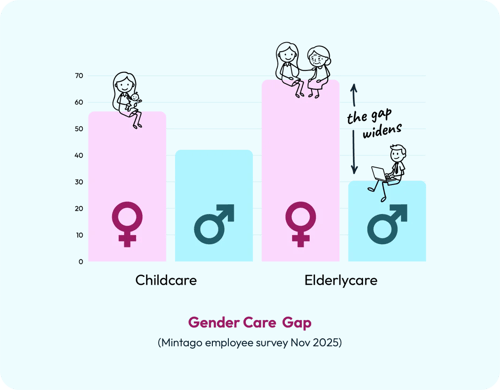
We asked Jana Meier from Carents why the burden of elderlycare falls disproportionately on women.
She told us it often starts when women take the lead in childcare. “It's a continuation,” she says, “Where we expect women, daughters, granddaughters to be more hands-on when caring for the older generation.”
You can learn more about why women are more likely to shoulder the demands of care in our latest report. Did I mention it’s free? (It’s free.)
2. The cost of care means work stops making financial sense
75% of women who pay for childcare say it no longer makes financial sense for them to work, according to Pregnant Then Screwed.
-
Full-time childcare costs £1,433 a month for a child under 2. (MoneyHelper)
-
And elderlycare is even more expensive. Nursing homes cost £79,820 on average. (Carehome.co.uk)
Over and over again, women are forced to choose between their careers and their families. And really, that’s no choice at all.
3. Just as women’s careers peak, it all collides
This is when things get really dangerous. Right when women are most experienced, most valuable to their employers, they’re hit by multiple pressures all at once.
This is the Sandwich Generation – caught between caring for children and ageing family members at the same time.
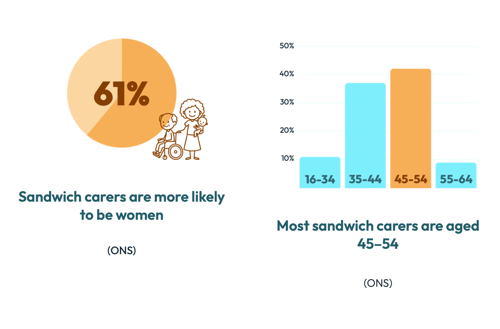
Sandwich Carers are far more likely to be women. Big shock. And they’re most likely to be aged 45–54. Often that means your mid-senior managers. The kind of people you can’t afford to lose – who cost multiple times their salary to replace.
If you don’t support them, you’ll lose them
Generally speaking, children grow up and learn to look after themselves. But the needs of elderly relatives tend to increase over time.
“Often it happens over the course of years,” says Jana. “Suddenly you realise you're providing 20 plus hours of care. But it probably didn't start at that point. You probably started helping your mum once a week for an hour.”
Research shows when carers have to provide more than 20 hours of care a week, they’re dramatically more likely to be in poor health, out of work and struggling financially.
When women go unsupported, employers pay the price
McKinsey didn’t just fail to acknowledge the impact of care – they failed to understand what’s costing employers valuable talent.
As care demands increase, work suffers, deadlines get missed and sudden staffing gaps become the norm.
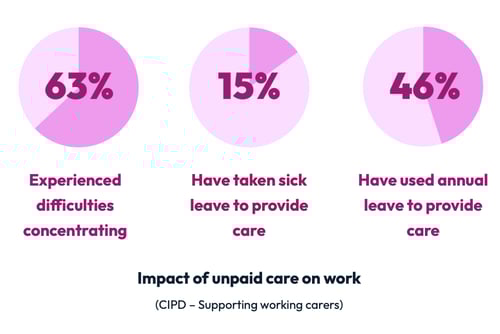
Employers need to provide the right support at the right time, so women aren’t forced to make impossible choices.
-
Help them understand their options, with access to trusted advice – so they can bring their best selves to work, free from stress and distractions.
-
Help them find the care their family needs – so they’re not constantly having to step in to cover emergencies.
-
And help make childcare and elderlycare affordable – so they don’t have to quit work to do it themselves.
Just like how the care pressures women face aren't a mystery, the solutions aren’t rocket science either. It’s well within your power to support women and drive better outcomes for your business.